Solar panels on a roof at sunset

MONOLITH Solar Panel

by SunPower

Solar panels on a roof at sunset

MONOLITH Solar Panel

by SunPower

470 W

PER PANEL

22.6%

EFFICIENCY

−0.25%/°C

HEAT COEFFICIENT

92%

POWER AT YEAR 25

Solar you’ll want people to see

Roof with all-black solar panels

Premier design

Edge to edge sleek design elevating your roofline, and bringing more power to your home.

Why this panel produces more

Solar panel surface

0%

lost to pane size

Most panels stop 1–2% shy of their rated output because of inactive border glass. The Monolith’s cells run edge to edge, so the full pane works for you.

Installer working on a rooftop solar array

96%

output at 140°F

A rooftop panel runs 50–90°F hotter than the air. At 140°F the Monolith holds about 96% of its rated power, while typical panels drop closer to 90%.

Solar panel cell detail

0.25%

fade per year

Panels fade as microcracks build up in the cells. A first, humidity, cracking, and heat test cycle shows the Monolith fading at about a third the rate of a typical panel — so year 25 looks a lot more like year one.

30 panels outproduced 34 in independent testing¹

30 panels outproduced 34 in independent testing¹

Same roof, same inverter, same sun. Competitors got two to four extra panels — and still produced less.
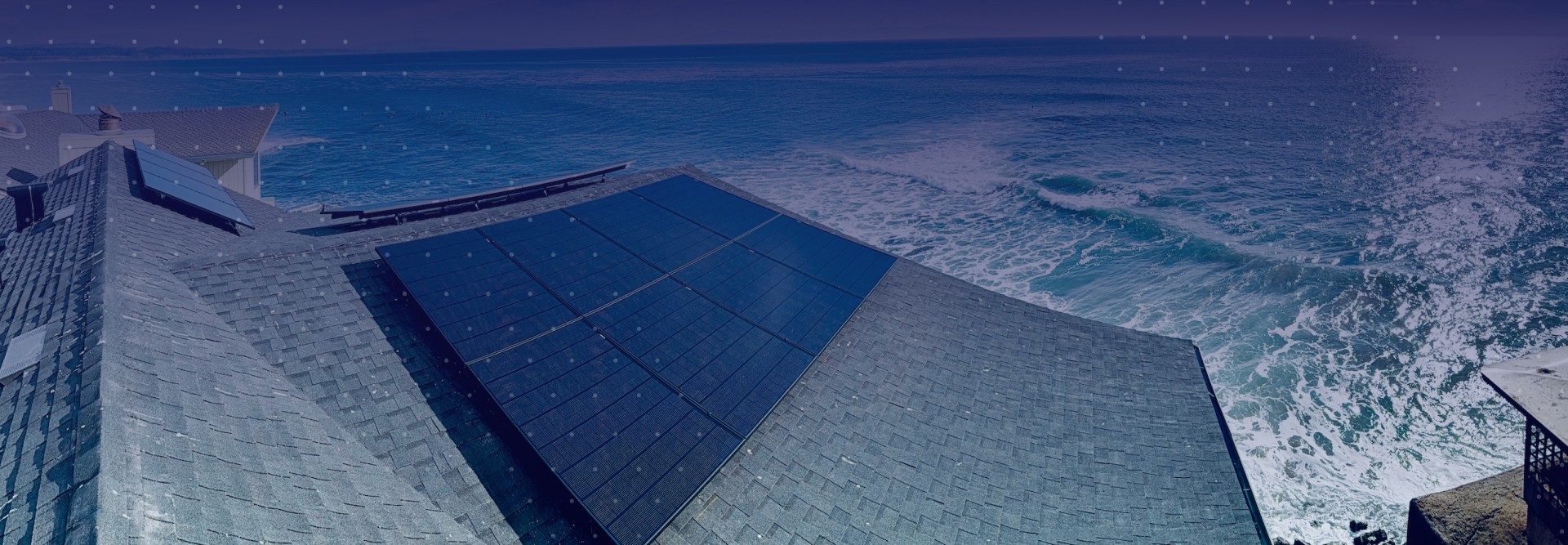
Solar Panel

Heterojunction cells

Combines modern cell technology for high performance and captures more light for greater energy generation.

N-type technology = more power

No initial power loss. You get the output you pay for from day one.

Advanced gapless cell connections

Reduces cell stress, eliminates soldering, and keeps the panel compact for long-term durability.

Guaranteed better durability

Built to withstand high pressure and protect against harsh weather conditions.

Improved looks

Gapless cells and a full-black appearance create a clean, elegant roofline.

High power density

Generates more clean energy from available rooftop space.

Higher efficiency at the hottest times

A leading temperature coefficient supports stronger production in hot conditions.

Exceptional quality

Highly automated production improves efficiency, reliability, and consistency.

Heterojunction cells

Combines modern cell technology for high performance and captures more light for greater energy generation.

N-type technology = more power

No initial power loss. You get the output you pay for from day one.

Advanced gapless cell connections

Reduces cell stress, eliminates soldering, and keeps the panel compact for long-term durability.

Guaranteed better durability

Built to withstand high pressure and protect against harsh weather conditions.

Solar panel standing in grass

Improved looks

Gapless cells and a full-black appearance create a clean, elegant roofline.

High power density

Generates more clean energy from available rooftop space.

Higher efficiency at the hottest times

A leading temperature coefficient supports stronger production in hot conditions.

Exceptional quality

Highly automated production improves efficiency, reliability, and consistency.

The independent test, in brief

A technical simulation performed by Cobalt Power Systems compared the REC 470W SunPower Monolith 470 module against Qcells’ Q.TRON 430W and Philadelphia’s 410W module. All systems used the same inverter, same tilt, same location, and no shading. The SunPower Monolith 470 produced 25,284 kWh annually.

A technical simulation performed by Cobalt Power Systems compared the REC 470W SunPower Monolith 470 module against Qcells’ Q.TRON 430W and Philadelphia’s 410W module. All systems used the same inverter, same tilt, same location, and no shading. The SunPower Monolith 470 produced 25,284 kWh annually.

For a similar roof footprint, Qcells produced 23,558 kWh/yr and Philadelphia produced 22,227 kWh/yr. When Qcells increased its array size and added one more module, output increased to 24,294 kWh/yr. When Philadelphia increased array size and added two modules, output increased to 23,640 kWh/yr. In both cases, even with additional roof coverage and additional hardware, neither system surpassed the SunPower Monolith 470’s annual energy output.

¹ V. Jolissaint, Project SunPower Monolith 470 — technical simulation by Cobalt Power Systems.

MONOLITH 470 out performs²

MONOLITH 470

22 panels

25,284 kWh

Qcells Q400W

24 panels

24,264 kWh

Qcells 420W

24 panels

23,036 kWh

Philadelphia 410W

26 panels

22,237 kWh

²Simulated annual production — same-size residential roof, identical inverter and shading. Actuals vary by site, weather, and design.

More power for more years

Typical Tier 1 panels stop at 84–86%. The difference compounds to roughly 25% more total energy over the panel’s lifetime.

Home with rooftop solar panels

92%

At year 25, in the warranty: common IREC 25-year+ lists a maximum fade of 0.25% a year. Estimated useful life: 40 years — the warranty stops long before the panel does.

Home with rooftop solar panels

92%

At year 25, in the warranty: common IREC 25-year+ lists a maximum fade of 0.25% a year. Estimated useful life: 40 years — the warranty stops long before the panel does.

Higher efficiency also means fewer panels to buy, mount, and wire — which can lower installation costs over the life of the system.

Inside the heterojunction cell

The cell technologies in one cell: more light in, less power lost.
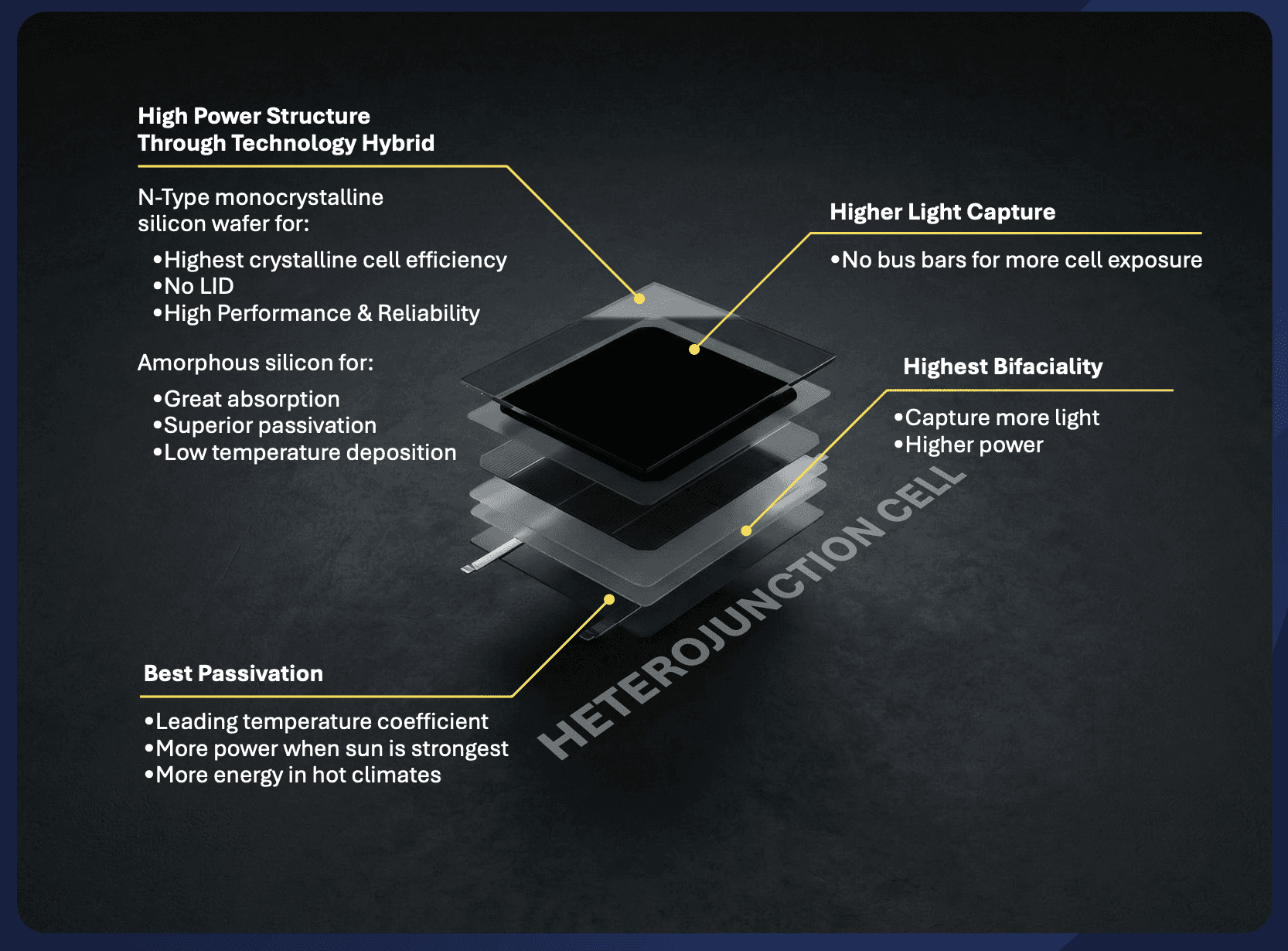
No bus bars

Nothing blocking the cell from the sun. The full surface works, and there’s no ribbon to fatigue and crack over decades of thermal cycling.

N-type silicon wafer

Immune to the light-induced degradation that costs standard P-type panels 1–3% of output in the first year alone.

Amorphous silicon skin

Thin passivation layers cut electron losses at the cell surface — the key to the leading temperature coefficient and slow fade rate.

Bifacial cells

66 half-cut cells, light-sensitive on both faces. With a 90%+ bifaciality index, reflected light off the roof adds usable production.

Best in class temperature coefficient

Under normal conditions the SunPower Monolith panels retain more power as they heat up, producing electricity even during the hottest and strongest sun hours.

Home with rooftop solar panels

6% More Energy

12 Month Average. Outpacing the rest

Home with rooftop solar panels

6% More Energy

12 Month Average. Outpacing the rest

Higher efficiency also means fewer panels to buy, mount, and wire — which can lower installation costs over the life of the system.

Works better in heat of the day where others drop off.

Rated for hail, snow, and 176°F rooftops

Rated for hail, snow, and 176°F rooftops

An extreme heat rating of up to 185°F (versus the industry’s IEC 61215, IEC 61730, and UL 61730) — among the top rated in durability in third-party testing.

Dramatic sunset sky over the horizon

146 lbs/ft²

front-side snow and static load rating

45 mm hail

tested at highway speeds without cracking

−40°F to 176°F

operating temperature range

95% humidity

damp-heat tested for 1,000 hours

Specifications

Power output

470 W lab (STC) · 356 W real world (NMOT)

Efficiency

22.6% · 0.24%/°C temperature coefficient

Cell architecture

66 half-cut heterojunction cells, bifacial, gapless

Dimensions

74.4 × 41.1 × 1.2 in

Certifications

IEC 61215 / 61730 · UL 61730 · Class A fire rating

Carry weight

46.3 lbs

Power output

470 W lab (STC) · 356 W real world (NMOT)

Efficiency

22.6% · 0.24%/°C temperature coefficient

Cell architecture

66 half-cut heterojunction cells, bifacial, gapless

Dimensions

74.4 × 41.1 × 1.2 in

Certifications

IEC 61215 / 61730 · UL 61730 · Class A fire rating

Carry weight

46.3 lbs

Download the data sheet

Monolith Warranties
Standard vs. ProTrust

Monolith Warranties
Standard vs. ProTrust

Coverage

Coverage

Standard

Standard

ProTrust (certified installer)

ProTrust certified

Product warranty

Product warranty

25 years

25 years

25 years

25 years

Power warranty

Power warranty

25 years

25 years

25 years

25 years

Labor coverage

Labor coverage

Not included

Not included

25 years

25 years

Power in year 1

Power in year 1

98%

98%

98%

98%

Power at year 25

Power at year 25

At least 92%

At least 92%

At least 92%

At least 92%

Common questions

Common questions

Are cheaper panels a better deal?

It boils down to price per watt delivered, not price per panel. In simulation, adding extra sample panels still didn’t match the Monolith’s output — and more panels means more racking, wiring, and labor on your roof.

Is higher-watt panels matter?

Watts are only fit to electricity, not conclusion. Most panels and today convert 19–22% of sunlight into electricity; the Monolith converts 22.6%, so it gets more power out of every square foot of roof — which matters most on small or complex roofs.

What about bifacial?

The cells are already bifacial, with a 90%+ bifaciality index. Starting mid-2026, sealed designs will count the extra energy the backside picks up from roof reflection.

How much roof space does it need?

Just over 21 square feet per panel. A typical 30-panel system needs about 640 square feet of usable, mostly south- or west-facing roof.

Who makes the Monolith?

Built by REC, installed through SunPower.

Does it work with batteries?

Yes. It pairs with our battery options, including the Enphase IQ Battery 5P and 10C.

Get a free design for your roof

Get a free design for your roof

It shows your panel count, production estimate — no obligation.

Why this panel produces more

Solar panel surface

0%

lost to pane size

Most panels stop 1–2% shy of their rated output because of inactive border glass. The Monolith’s cells run edge to edge, so the full pane works for you.

Installer working on a rooftop solar array

96%

output at 140°F

A rooftop panel runs 50–90°F hotter than the air. At 140°F the Monolith holds about 96% of its rated power, while typical panels drop closer to 90%.

Solar panel cell detail

0.25%

fade per year

Panels fade as microcracks build up in the cells. A first, humidity, cracking, and heat test cycle shows the Monolith fading at about a third the rate of a typical panel — so year 25 looks a lot more like year one.