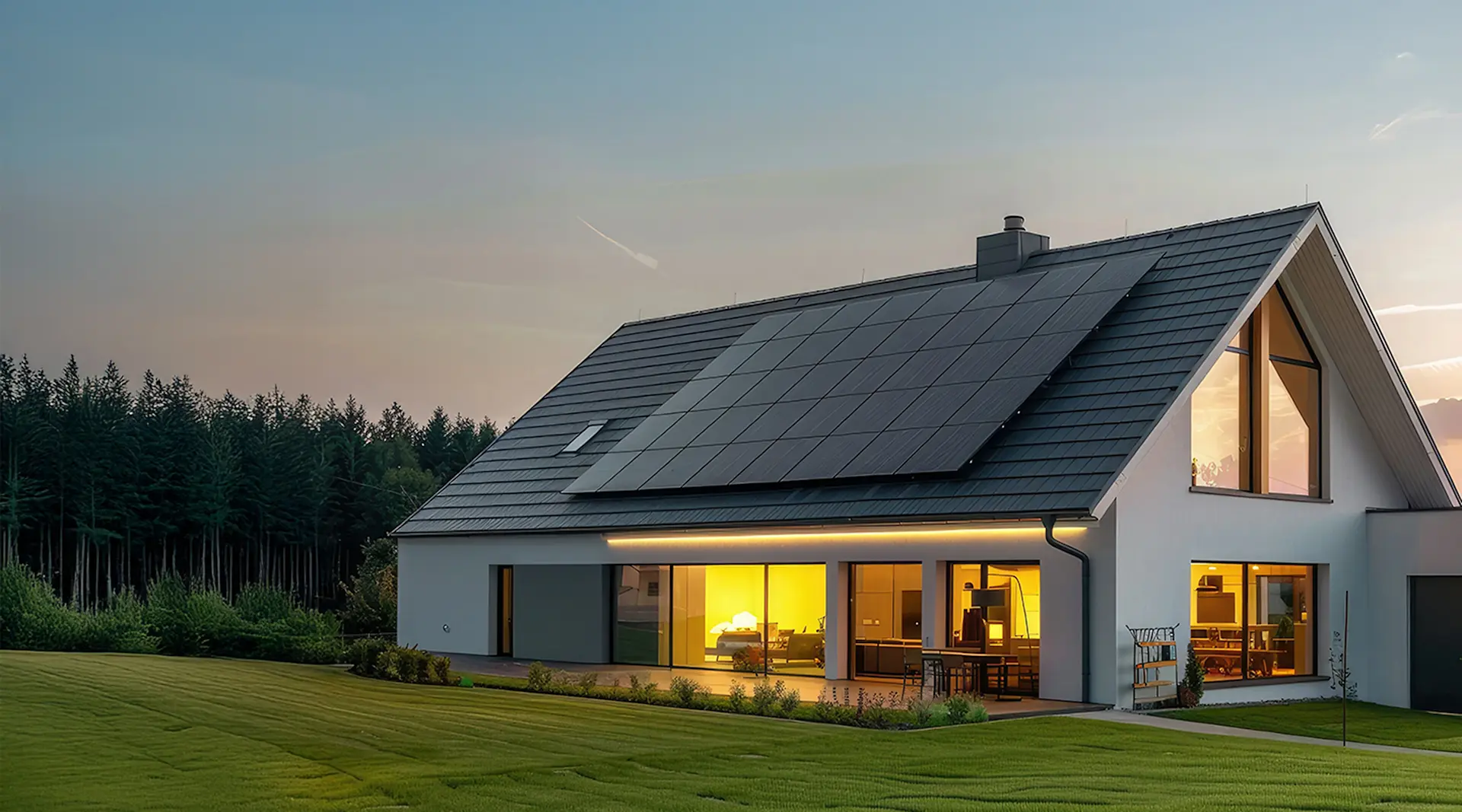
Solar Panels for New Home Construction

High-Quality Solar Panels for Home

Solar Panels for New Home Construction

High-Quality Solar Panels for Home

Solar Panels for New Home Construction

High-Quality Solar Panels for Home

Solar panels on a home roof

We’re as committed to your solar investment as you are. We prioritize quality and focus on maintaining strict standards of solar panel, battery, and monitoring equipment performance.

Our team reviews vendor performance and reliability testing documentation to verify compliance to industry standards.

Monocrystalline solar panels on home roof

Monocrystalline Solar Panels

Capture the sun’s power with premium monocrystalline solar panels for your home. Install high-performance modules known for their long-lasting durability and strong energy output – with diverse aesthetics and wattages to perfectly match your unique energy needs.

Get started

High-Quality Solar Panels and Energy Storage

Home energy management solar battery

Smart Energy Management for Your Home

Transform your solar investment with intelligent battery storage that puts you in control. Store excess electricity, potentially reduce energy costs, and maintain power during outages—our custom solutions deliver energy independence that adapts to your family’s unique lifestyle and goals.

Solar installation warranty support

Warranties and Guarantees

Your solar investment is protected by comprehensive warranties that ensure long-term performance and total peace of mind. We stand behind our systems and workmanship, so you can focus on powering your future with confidence.

Ready to transform your energy future? Discover your potential savings with a free consultation and unlock the power of personalized solar solutions for your home.

Take Control of Your Energy with SunPower

Home battery storage system

Powerful Battery Storage for Energy Independence

SunPower's advanced battery storage system allows you to store excess solar energy for use whenever you need it! Our safe, reliable, and scalable solutions integrate seamlessly with your solar panels, reducing reliance on the grid, maximizing savings, and providing backup power during outages.

Solar monitoring app and energy system

Intelligent Monitoring for Optimal Performance

Stay connected to your solar + storage system with SunPower's advanced monitoring. Our Enphase App provides real-time insights, helping you optimize performance, and prepare for weather events. With 24/7 support and expert guidance, you can confidently manage your home energy system.


Save by Going Solar

Save by Going Solar

Save by Going Solar

Frequently Asked Questions about High Efficiency Solar Panels


The number of solar panels you'll need for your home will depend on several factors. One simple way of answering "How many solar panels do I need" is to let a local solar installer look at your home and give you a quote for system size (including number of wattage of panels), cost, and estimated annual and lifetime savings.

Another way, is to look at your electricity bill to get your home’s hourly energy usage, multiply that by the peak sunlight hours for your home (3 to 4 hours on average), and divide by 400, which is an average wattage for solar panels (although they can range from 350 to 460).

Hourly energy usage x peak sunlight hours / 400 = number of panels. This typically ranges from 17-42 panels.

Most home solar systems use monocrystalline panels because they’re more efficient at converting sunlight into electricity. These panels are made from a single crystal of silicon, which helps electricity flow more easily compared to polycrystalline panels, which are made from melted silicon fragments.

Another key difference is the type of silicon used in the cells.

P-type cells have been common for years.

N-type cells are now becoming the preferred choice because they perform better in heat, degrade more slowly, and are generally more efficient.

Many manufacturers are now moving to n-type monocrystalline panels—a top choice for homeowners looking for long-term performance.

Yes, solar panels experience some efficiency loss over time, but it’s minimal and expected. This gradual decline is due to long-term exposure to sunlight. All of our panels come with a 25- or 30-year manufacturer’s warranty, depending on the model, and are designed for long-term performance. We maintain high quality standards and work closely with our panel manufacturers and partners to ensure reliability—backed by long-lasting warranties and support.

Frequently Asked Questions about High Efficiency Solar Panels


The number of solar panels you'll need for your home will depend on several factors. One simple way of answering "How many solar panels do I need" is to let a local solar installer look at your home and give you a quote for system size (including number of wattage of panels), cost, and estimated annual and lifetime savings.

Another way, is to look at your electricity bill to get your home’s hourly energy usage, multiply that by the peak sunlight hours for your home (3 to 4 hours on average), and divide by 400, which is an average wattage for solar panels (although they can range from 350 to 460).

Hourly energy usage x peak sunlight hours / 400 = number of panels. This typically ranges from 17-42 panels.

Most home solar systems use monocrystalline panels because they’re more efficient at converting sunlight into electricity. These panels are made from a single crystal of silicon, which helps electricity flow more easily compared to polycrystalline panels, which are made from melted silicon fragments.

Another key difference is the type of silicon used in the cells.

P-type cells have been common for years.

N-type cells are now becoming the preferred choice because they perform better in heat, degrade more slowly, and are generally more efficient.

Many manufacturers are now moving to n-type monocrystalline panels—a top choice for homeowners looking for long-term performance.

Yes, solar panels experience some efficiency loss over time, but it’s minimal and expected. This gradual decline is due to long-term exposure to sunlight. All of our panels come with a 25- or 30-year manufacturer’s warranty, depending on the model, and are designed for long-term performance. We maintain high quality standards and work closely with our panel manufacturers and partners to ensure reliability—backed by long-lasting warranties and support.

Frequently Asked Questions about High Efficiency Solar Panels


The number of solar panels you'll need for your home will depend on several factors. One simple way of answering "How many solar panels do I need" is to let a local solar installer look at your home and give you a quote for system size (including number of wattage of panels), cost, and estimated annual and lifetime savings.

Another way, is to look at your electricity bill to get your home’s hourly energy usage, multiply that by the peak sunlight hours for your home (3 to 4 hours on average), and divide by 400, which is an average wattage for solar panels (although they can range from 350 to 460).

Hourly energy usage x peak sunlight hours / 400 = number of panels. This typically ranges from 17-42 panels.

Most home solar systems use monocrystalline panels because they’re more efficient at converting sunlight into electricity. These panels are made from a single crystal of silicon, which helps electricity flow more easily compared to polycrystalline panels, which are made from melted silicon fragments.

Another key difference is the type of silicon used in the cells.

P-type cells have been common for years.

N-type cells are now becoming the preferred choice because they perform better in heat, degrade more slowly, and are generally more efficient.

Many manufacturers are now moving to n-type monocrystalline panels—a top choice for homeowners looking for long-term performance.

Yes, solar panels experience some efficiency loss over time, but it’s minimal and expected. This gradual decline is due to long-term exposure to sunlight. All of our panels come with a 25- or 30-year manufacturer’s warranty, depending on the model, and are designed for long-term performance. We maintain high quality standards and work closely with our panel manufacturers and partners to ensure reliability—backed by long-lasting warranties and support.